Historic Confessions and Ambiguity
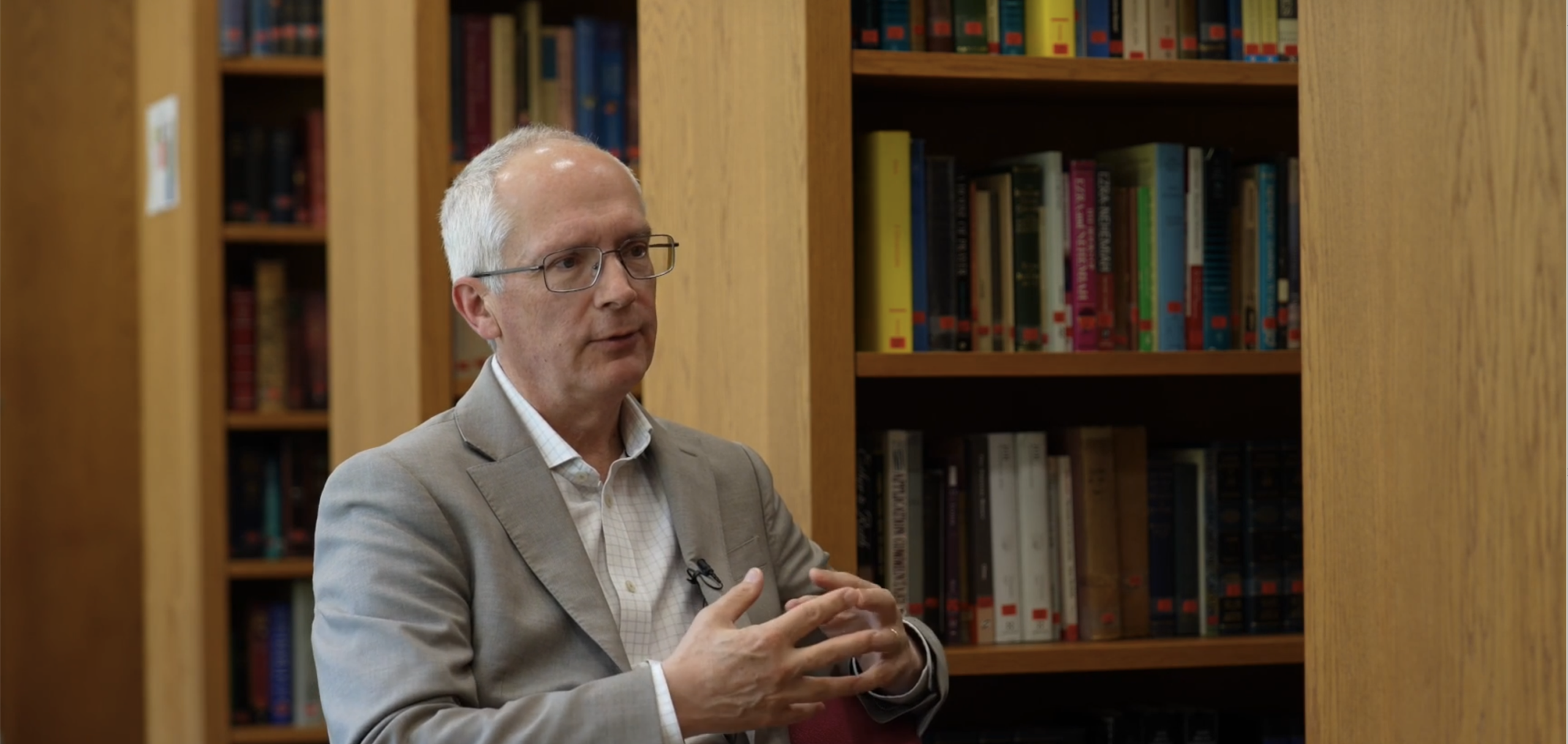
One of our bestselling titles is Dr Robert Strivens’ excellent The 1689 Handbook. Robert’s work implicitly and convincingly makes an argument for the worth and vital place that historic confessions should hold in the esteem of individual Christians and local churches. In this clip, Robert grapples with a question many people harbour about confessionalism – isn’t it restrictive and the enemy of all ambiguity? His answer is nuanced and invites us to think further about how confessions work.
Robert Strivens practised law as a solicitor in London and Brussels for fifteen years, before training for pastoral ministry at London Theological Seminary (as it was then called). On completion of his studies in 1999, he was called to the pastorate of Banbury Evangelical Free Church. He began to teach New Testament Greek and New Testament studies at LTS and in 2007 was appointed Vice-Principal and then, in 2008, Principal of the Seminary. During his time at Banbury, he completed a ThM degree from Westminster Theological Seminary in church history and then began doctoral studies under Professor David Bebbington at Stirling University, which he completed after moving to London Seminary. In 2017, he moved to Bradford on Avon to take up the pastorate of the long-established Baptist church there. He remained there until 2026, when he became Director of the Reformed Baptist Study Centre.
Robert continues to teach church history at London Seminary and at a variety of other institutions preparing men for pastoral ministry. He has published articles on a variety of historical and pastoral topics. His current research and writing projects include an examination of evangelical attitudes to learning and the mind and a book on church discipline. Robert is married to Sarah and they have three sons and several grandchildren.